Cathedral Rock Trail: The Complete 2026 Guide

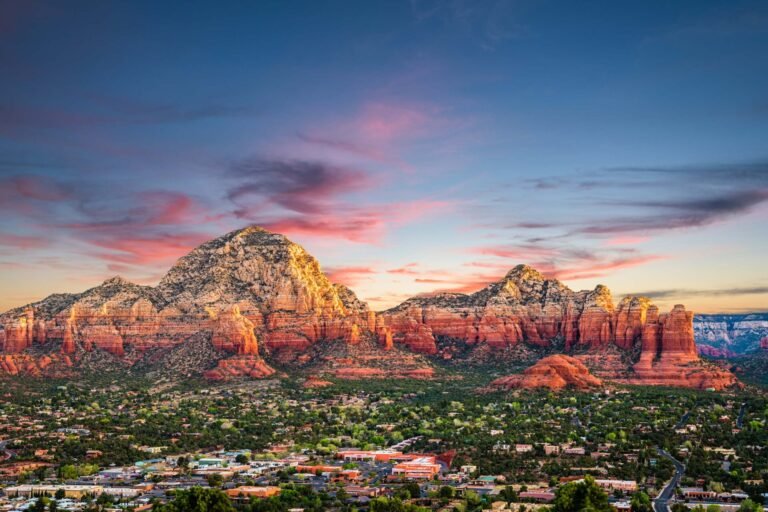
If Sedona has a signature hike, this is it. Cathedral Rock’s red spires are the formation on half the postcards, and the trail to the saddle between them packs an absurd amount of drama into barely over a mile. It is short, it is steep, and at one point you will be using your hands as much as your feet. Go at sunrise and you’ll understand why people call this place spiritual — go at noon on a Saturday and you’ll understand why the shuttle exists. It’s one of the essential things to do in Sedona, Arizona, and pairs perfectly with our Devil’s Bridge trail guide for a second iconic hike.
Who it’s for: reasonably fit hikers comfortable with steep rock and short scrambles. Who should think twice: anyone with bad knees, vertigo that doesn’t tolerate exposure, or kids who can’t be trusted on steep slickrock — the drop-offs near the top are real.
Quick Stats
| Distance (round trip) | ~1.2–1.3 miles |
| Elevation gain | ~700 feet |
| Difficulty | Moderate to strenuous (hands-on scramble) |
| Time needed | 1–2 hours (about 45 min up at a steady pace) |
| Route type | Out-and-back |
| Trailhead | Cathedral Rock Trailhead, off Back O’ Beyond Road (~10 min from downtown Sedona) |
| Fee | Red Rock Pass required to park ($5/day, $15/week, $20/year; America the Beautiful pass accepted). No pass needed if you ride the shuttle. |
| Dogs | Allowed on leash on the trail (not allowed on the shuttle) |
| Facilities | Vault toilets at the trailhead |
| Vortex site | Yes — one of Sedona’s four main vortex sites |
Getting There: The Shuttle-vs-Drive Decision (2026 Rules)
Thursday through Sunday, the trailhead parking lot is closed to private cars from 7:00 AM to 5:30 PM, year-round. During those hours, the only way to reach the trailhead is the free Sedona Shuttle (Route 15), departing from the N SR-179 Park and Ride lot. No reservations needed, roughly every 15–20 minutes, and parking at the park-and-ride is free. During peak periods (spring break, holidays), the shuttle runs seven days a week — check sedonashuttle.com before your trip.
Monday through Wednesday (outside peak periods), you can drive straight to the trailhead — but the lot is small and fills extremely early on nice days. If you want a parking spot, arrive before 7 AM.
Two practical notes: you don’t need a Red Rock Pass when you shuttle in (you’re not parking at the trailhead), and dogs can’t ride the shuttle — if you’re bringing a dog, go Monday–Wednesday and drive.
Alternate approaches: you can also reach Cathedral Rock from the Baldwin Trail or Templeton Trail trailheads if you want a longer, quieter walk in.
The Trail, Step by Step
The trailhead to the slickrock (first ~10 minutes). The trail starts as a normal dirt path through juniper and scrub, climbing gently. Enjoy it — it’s the easiest walking you’ll do all day. The formation looms the whole time, which is both motivating and slightly alarming once you see how steep the upper section looks.
The slickrock ascent. Within minutes the dirt gives way to bare red rock, and the trail gets steep fast. This is where the hike earns its rating: long smooth slabs, no shade, and route-finding by basket cairns (wire rock piles) — follow them and don’t build your own. The rock is grippier than it looks in dry conditions, but it’s treacherous when wet. Wear shoes with real tread; this is not a flip-flop hike.
The crack (the crux). About two-thirds up, the route funnels through a narrow crack in the rock — a near-vertical section at roughly 60 degrees where you’ll be using hands and feet. It looks worse than it is: there are good holds, and most reasonably fit people get through fine. Take it slow, keep three points of contact, and don’t let a crowd behind you rush you.
The saddle (the payoff). You emerge onto the saddle between Cathedral Rock’s spires at roughly 4,967 feet, with the Verde Valley spread out below and Bell Rock and Courthouse Butte on the horizon. This is the classic photo spot and the place people sit quietly for a while — the vortex believers say this is where the energy is strongest. Explore carefully along the saddle, but respect the edges; the drops are serious.
The way down takes most people 30–45 minutes. Downclimbing the crack is the trickiest part — face the rock, go slow, and don’t be embarrassed to scoot.
Best Time to Go
Sunrise is the move. The trail faces east, the light on the spires is unreal, and — critically — you’ll share the saddle with a handful of people instead of a hundred. The lot/shuttle math also favors early: arrive for first light and you’re ahead of both the crowds and the heat.
Sunset is the runner-up, with gorgeous light and a livelier scene, but bring a headlamp — descending the slickrock in the dark is no joke, and the shuttle stops running at 5:30 PM (plan your exit accordingly on shuttle days).
Seasons: March–May and September–November are prime. Summer means starting at dawn to beat 90°F+ heat on shadeless rock. Winter is quiet and beautiful, but check for ice on the slickrock after cold nights.
Crowds: this is one of the busiest trails in Arizona. After 9 AM on any decent-weather day, expect company. Weekdays beat weekends; sunrise beats everything.
What to Bring & Safety
- Water: at least 1 liter per person, more in heat. There is no water on the trail.
- Shoes: hiking shoes or trail runners with grippy soles. The slickrock punishes bad footwear.
- Sun protection: hat, sunscreen, sunglasses — zero shade the entire climb.
- Hands free: use a small backpack, not a shoulder bag. You’ll need both hands in the crack.
- Headlamp if you’re doing sunset (or a very early sunrise start).
- Heat: Sedona sits around 4,300+ feet and the air is desert-dry — dehydration sneaks up fast. If it’s over 90°F, seriously consider a different hike or a dawn start.
- Monsoon (July–September): afternoon thunderstorms are routine. Slickrock + rain = dangerously slippery, and lightning on an exposed ridge is no joke. Be off the rock by early afternoon.
- Stay on the trail: the desert’s cryptobiotic soil crust is alive and fragile — follow the cairns, don’t cut switchbacks.
- Rattlesnakes live here. Watch where you put hands and feet, especially in warm months.
The Vortex Note
Cathedral Rock is one of Sedona’s four main vortex sites, and believers describe its energy as feminine — creative, nurturing, calming. Skeptics get the same views either way. Nobody leaves the saddle disappointed, whatever they came looking for.
Too steep? Ride instead. If the scramble sounds like more than you want, a jeep tour delivers red-rock thrills with zero climbing — see our ranked guide to the best jeep tours in Sedona.
Frequently Asked Questions
How long is the Cathedral Rock Trail?
About 1.2–1.3 miles round trip, with roughly 700 feet of elevation gain. Most hikers take 1–2 hours total, including time at the top.
How difficult is Cathedral Rock?
Moderate to strenuous. The distance is short, but the climb is steep with a hands-on rock scramble through a narrow crack near the top. It’s harder than the mileage suggests — but doable for most fit hikers.
Do I need the Sedona Shuttle for Cathedral Rock?
Thursday through Sunday from 7 AM to 5:30 PM, yes — the trailhead lot is closed to private cars and the free shuttle (Route 15, from the N SR-179 Park and Ride) is the only access. Monday–Wednesday you can drive, but the small lot fills very early.
Do I need a Red Rock Pass?
If you park at the trailhead: yes — $5/day, $15/week, or $20/year (America the Beautiful pass also works). If you ride the free shuttle in, no pass is needed.
What’s the best time of day to hike Cathedral Rock?
Sunrise — best light, fewest crowds, coolest temperatures. Sunset is beautiful too, but bring a headlamp and mind the 5:30 PM shuttle cutoff on shuttle days.
Can kids or dogs do Cathedral Rock?
Older kids who are sure-footed can manage it with close supervision; it’s not ideal for small children because of the steep scramble and exposure near the top. Dogs are allowed on leash on the trail, but not on the shuttle.